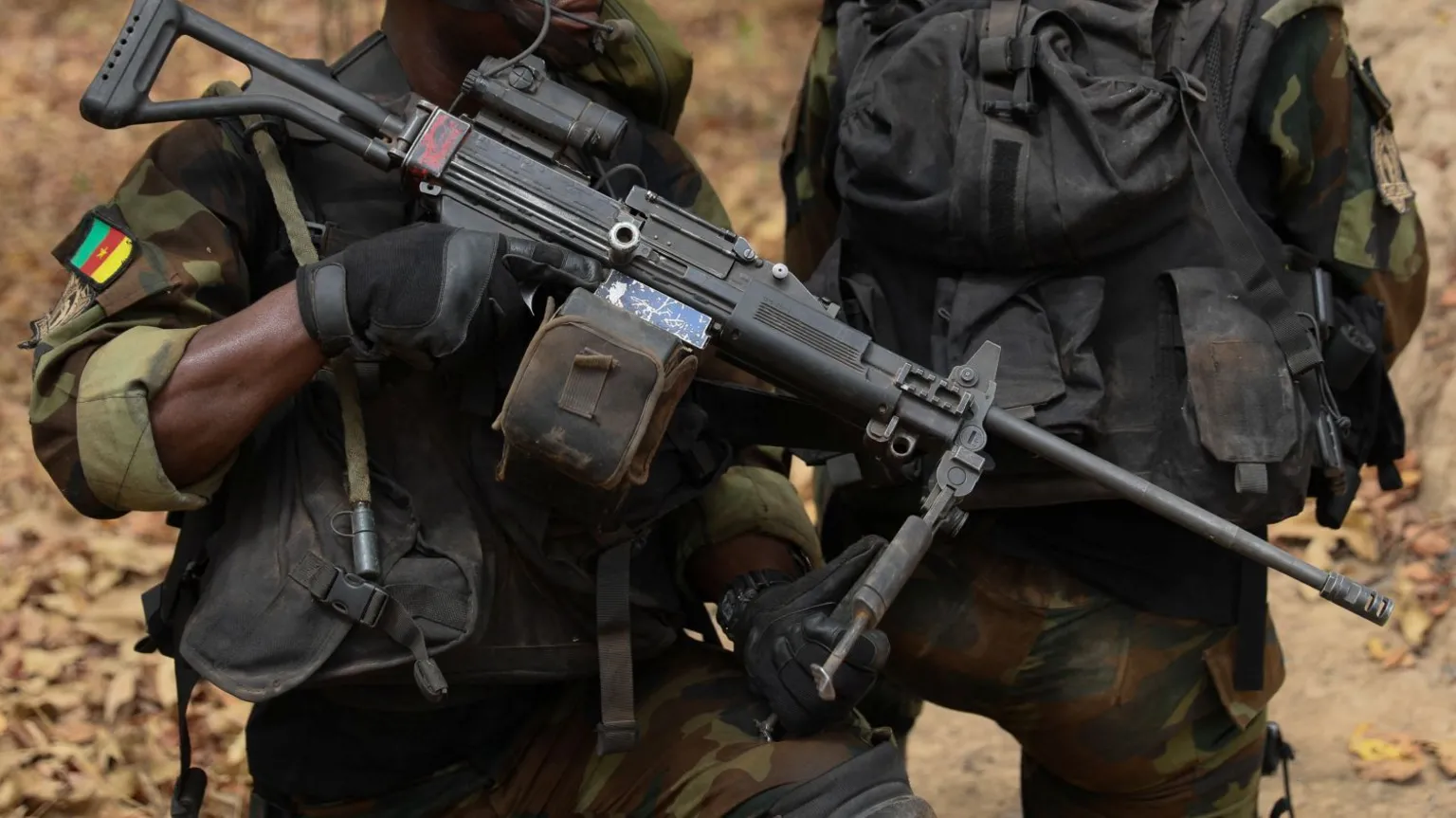
Cameroon has seen a rare judicial outcome as three soldiers were sentenced for their involvement in the killing of 21 civilians in the country’s English-speaking Northwest region.
The military court handed down terms ranging from five to 10 years for each soldier, following a case that highlighted one of the country’s most notorious incidents in the ongoing Anglophone conflict. A member of a local militia also received prison time for participating in the violence.
The convictions relate to the events of 14 February 2020, when government troops, backed by an ethnic Fulani militia, attacked the village of Ngarbuh.
The raid left 21 civilians dead, 13 of them children, according to Human Rights Watch. Homes were torched and residents were beaten, causing widespread fear among the villagers.
Initially, Cameroon’s authorities denied responsibility for the killings, but international scrutiny and an investigation commissioned by President Paul Biya forced the government to acknowledge the atrocities.
The case was seen as a rare instance where soldiers faced accountability for actions during the conflict, which has raged for nearly a decade in the country’s Anglophone regions.
Victims’ lawyers, however, expressed disappointment with the court’s decision. Sother Menkem told the BBC: "The sentence was so mild, I even qualify it as friendly because we are talking of a massacre."
He noted that Cameroonian law prescribes a minimum of 10 years for felonies such as murder and arson, and that the punishment did not reflect the trauma inflicted on the Ngarbuh community.
"I expected at least 30 years' imprisonment or more because [the soldiers] instilled much fear on the inhabitants of that area," he said.
The defence argued that the soldiers were acting in line with their duties. Meanwhile, the court rejected calls from victims’ families for compensation, prompting criticism from lawyers like Richard Tamfu.
Human Rights Watch also noted that the soldiers followed orders from higher-ranking officers, yet no senior military personnel faced charges in the case.
One of the survivors, who lost multiple family members, said he needed time to come to terms with the ruling and has since relocated for safety. The trial spanned six years, with numerous delays before the verdict was finally issued.
Since 2017, separatist fighters in Cameroon’s two English-speaking regions have been waging a campaign for an independent state. Both rebel groups and government forces have been accused of widespread human rights violations.
The United Nations estimates that the conflict has claimed at least 6,000 lives and displaced over half a million people.































Comments
Sign in with Google to comment, reply, and like comments.
Continue with Google